 Sole
Montalbano Elicona: what to see and why it is the perfect base for exploring Sicily
The medieval village between the Nebrodi and Peloritani mountains: castle, Argimusco megaliths, Malabotta Wood, hiking and walks, events and day trips to the Aeolian Islands, Tindari, Etna and Taormina.
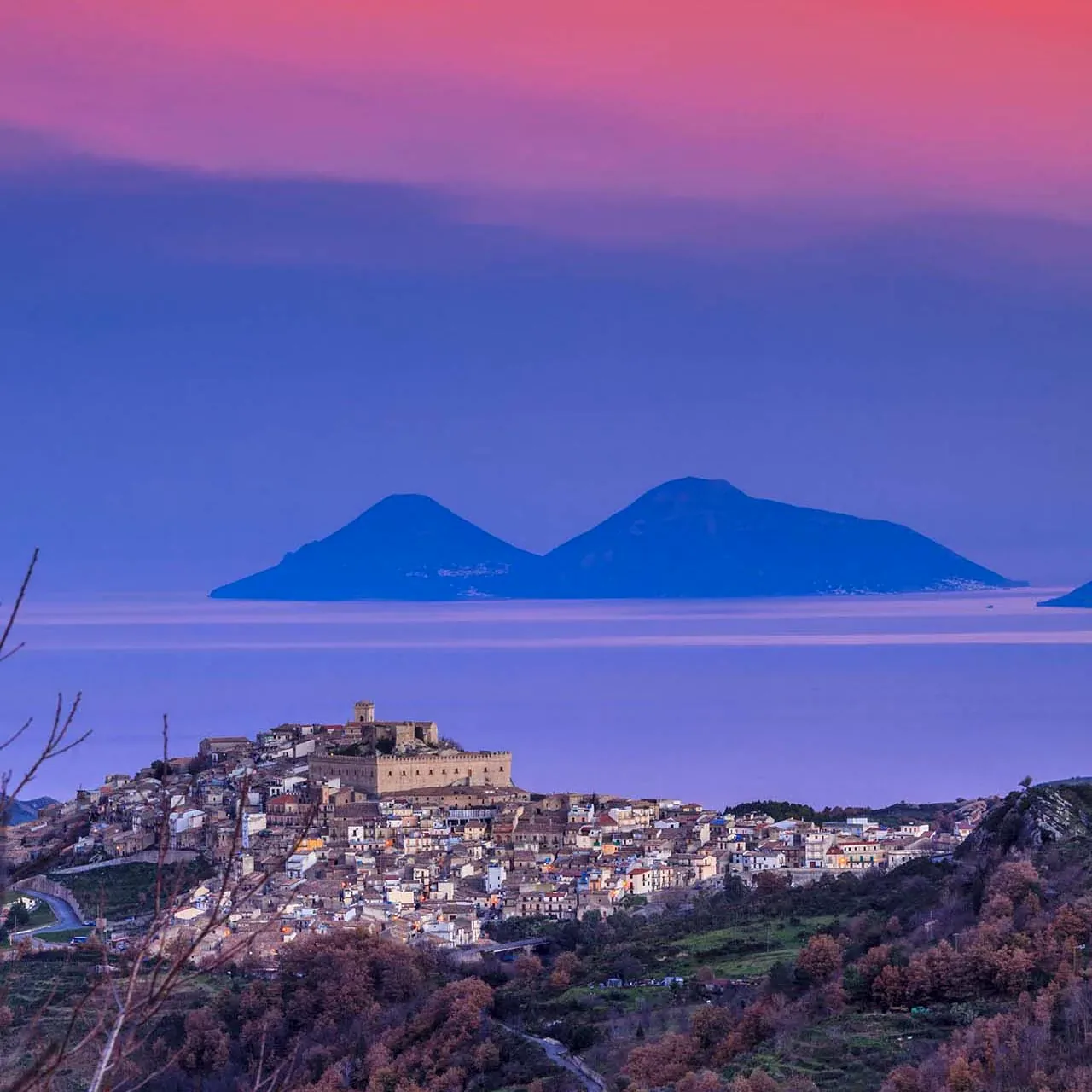
Montalbano Elicona is off the mass-tourism trail, and that is exactly its charm. It is a medieval village perched more than 900 metres above sea level, with views over the Nebrodi mountains, the Tyrrhenian Sea and the Aeolian Islands: in summer you can breathe up here while the coast swelters.
It is one of “The Most Beautiful Villages in Italy”, and in 2015 it was voted Italy's favourite village (Borgo dei Borghi). On this page you will find what to see in the village and the surrounding area, with practical information to plan your visit.
The castle: a king's summer residence
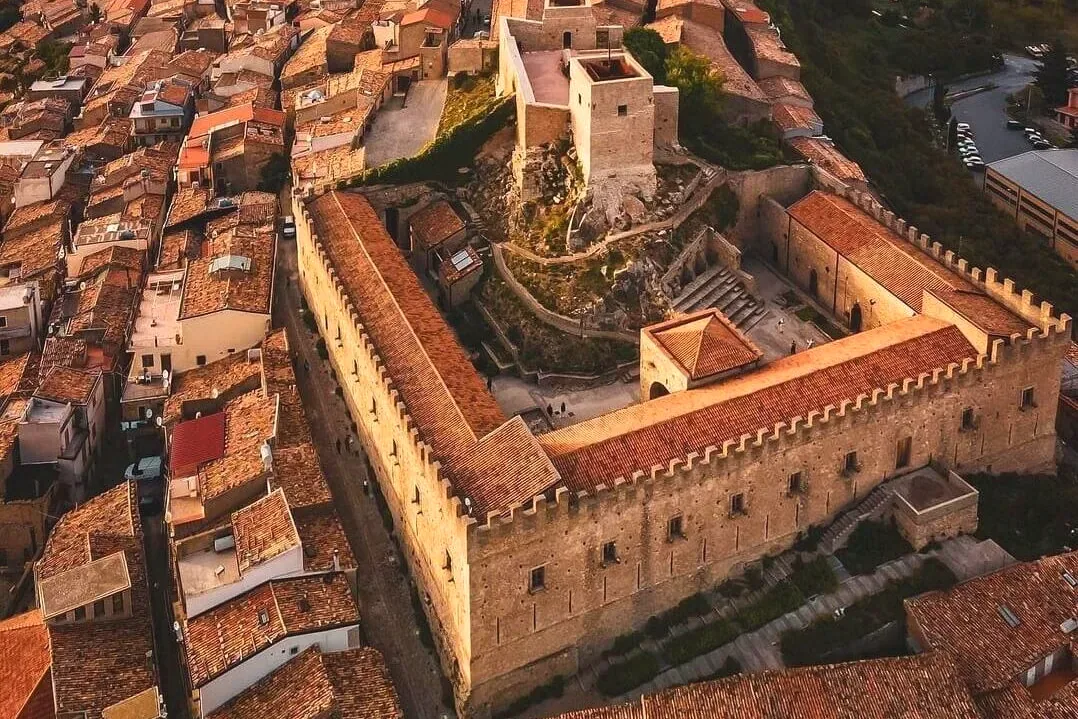
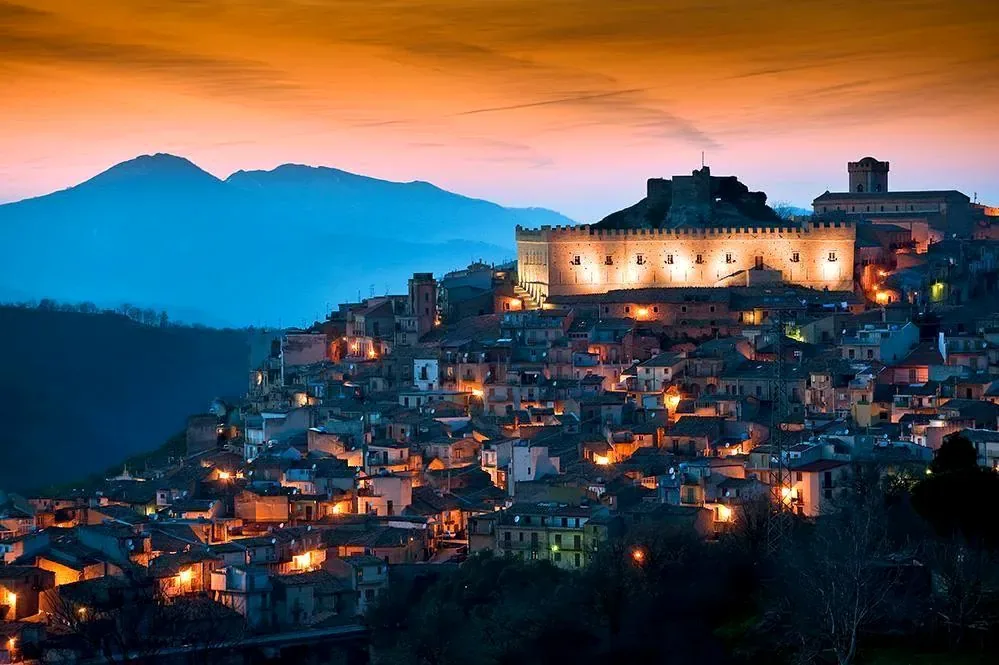
The castle dominates the village from above. It was built over earlier Byzantine and Arab structures and consists of a Norman-Swabian fort and a fortified palace from the Swabian-Aragonese period. Its golden age came at the beginning of the 14th century: between 1302 and 1308 the king stayed in Montalbano and turned part of the castle into a royal residence, opening large windows in the walls.
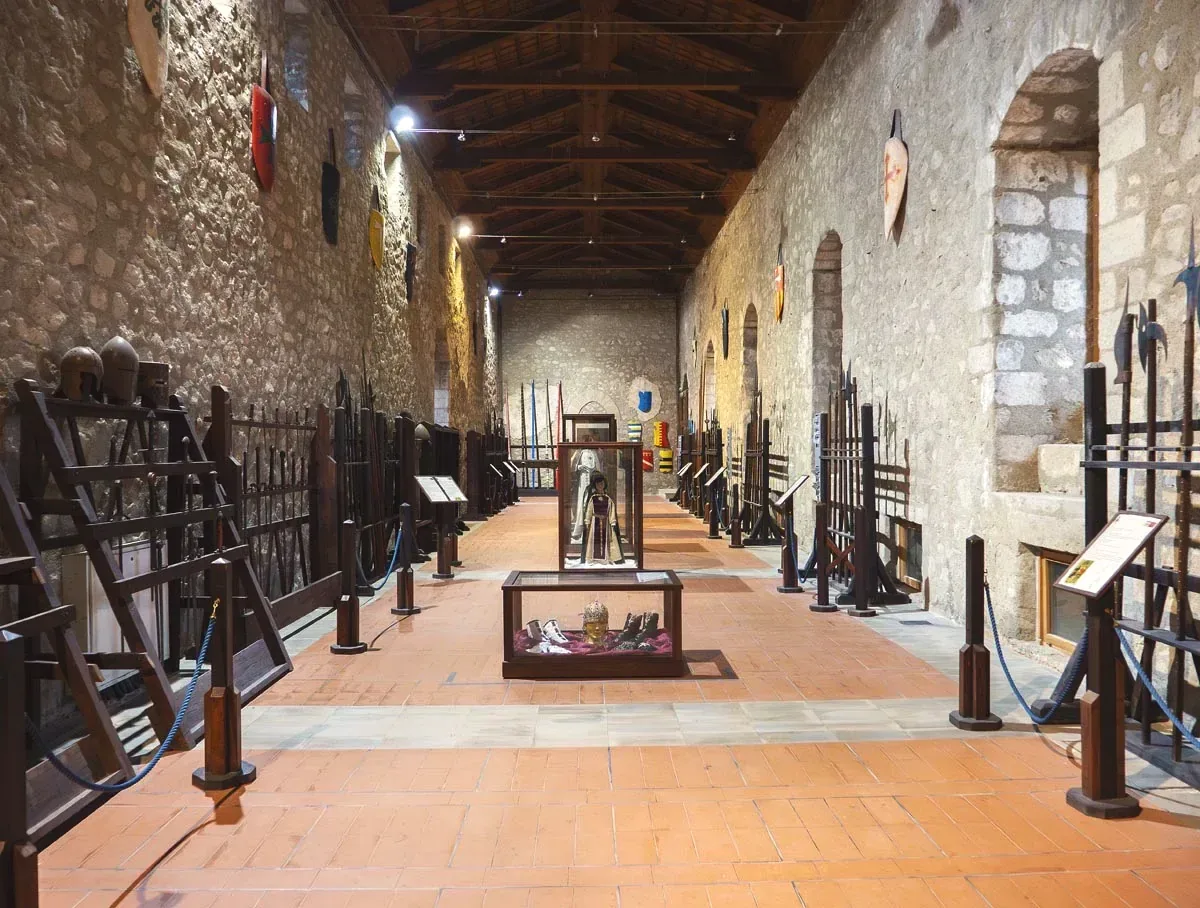
The chapel holds the stone tomb linked to Arnaldo da Villanova, the Catalan physician and alchemist who lived at the court of Frederick III of Sicily. The mystery is that Arnaldo died on a journey near the port of Genoa, so the plaque was most likely only commemorative. The halls display weapons, armour and knights' helmets, as well as a collection of ancient musical instruments. On clear days the view from the towers reaches all the way to the Aeolian Islands.
Opening hours and tickets: in summer the castle is open every day from 9:30 am to 1:30 pm and from 3 pm to 7 pm, with last entry fifteen minutes before closing. A full ticket costs €3, a reduced one €1.50. Out of season the hours change, so check them before your visit.
Getting there: the castle is a short walk from the centre through the lanes. Parking in the village is free.
The Argimusco megaliths: a mystery on the plateau
A few kilometres from the village a landscape opens up that looks like another planet. Argimusco is a plateau on the border between the Nebrodi and Peloritani mountains, scattered with huge sandstone rocks in striking shapes, from the eagle to the praying figure.
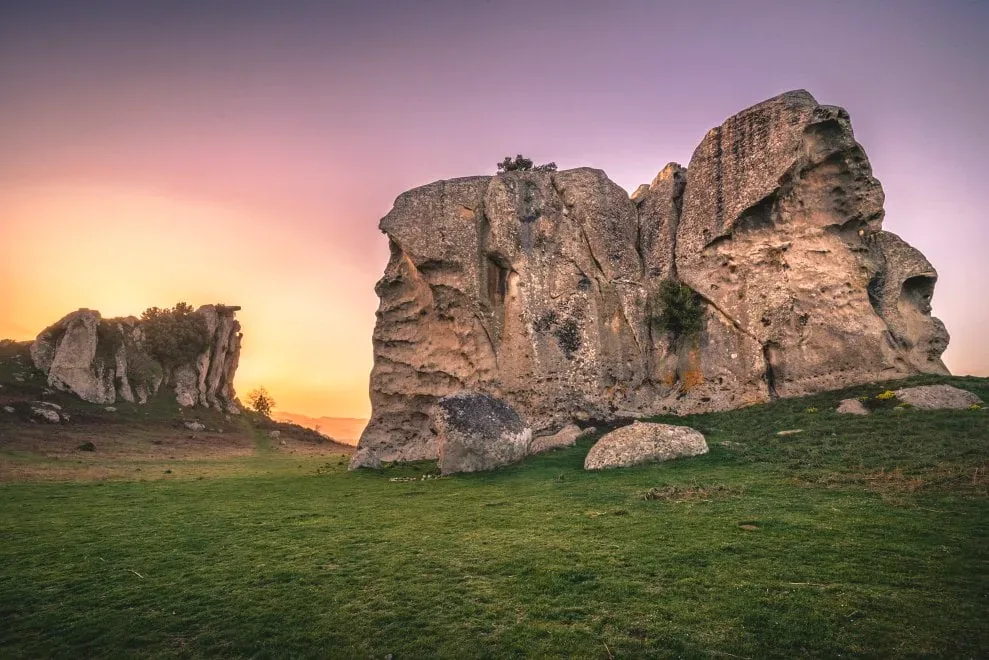
Some call it “the Sicilian Stonehenge”, and local tradition imagines ancient rituals and stone calendars. The truth is simpler and just as fascinating: there is no evidence of human settlement in the area, and archaeologists believe the shapes were carved by the wind. It remains a magical place with an extraordinary view: from here you can see Etna, the Aeolian Islands, Cape Tindari and Cape Milazzo.
Practical information: drive following the signs for contrada Argimusco. You leave the car just outside the reserve, where a trail starts that runs alongside the rocks. The Megaliths Trail is the easiest in the reserve: it is a loop with views of the Aeolian Islands, the peak of Novara di Sicilia and Etna. Wear comfortable or hiking shoes. Local guides often run late-afternoon walks, timed to arrive in the sunset light.
Malabotta Wood: among ancient beech and oak trees
Just beyond Argimusco, about 9 km from the centre, lies one of the most precious natural areas in Sicily. The reserve is considered the last of the forests that once covered the whole island, and it rises from 700 to more than 1,300 metres. Its heart is an intact beech forest of about 80 hectares. Foxes, porcupines and wildcats live in the woods, while sparrowhawks, peregrine falcons and buzzards fly overhead.
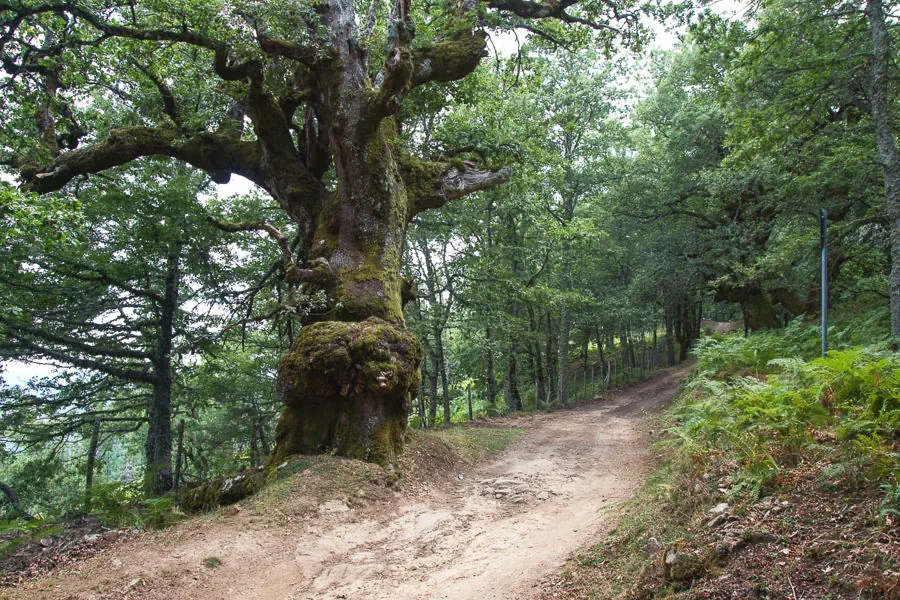
There are seven marked trails: the Patriarchs of the Wood, Faggita, the Trout, Frederick II, Voturi, Pittari and the Megaliths. In autumn the beech trees turn red and gold; in spring the undergrowth bursts into flower. If you prefer a guide, local associations organise guided walks.
A perfect destination for walkers
Montalbano is the right place for hikers, trekking lovers and anyone who simply enjoys walking in nature. The village sits above 900 metres between the Nebrodi and Peloritani mountains, and there are trails for everyone: from an easy stroll among the megaliths to full-day hikes in the woods and routes that lead from the mountains down to the sea.
- Easy walks: the Megaliths Trail at Argimusco is a loop suitable for everyone, families included, with views of Etna and the Aeolian Islands.
- Hiking in Malabotta Wood: seven marked trails among ancient beech and oak trees, from the Patriarchs of the Wood trail to the Frederick II trail.
- The Sentiero Italia: Italy's great long-distance trail, which crosses the whole peninsula, also passes through here, with the section linking Argimusco and Malabotta Wood.
- The Cammino di Tindari: one of its stages starts in Montalbano and descends through the hamlets of Braidi, Madoro and Scarpiglia to the sanctuary of Tindari: about 22 km from the mountains to the sea.
- Rocca di Novara: for experienced hikers, the climb up the “Matterhorn of Sicily”, with views from the Tyrrhenian Sea to Etna.
- Mountain biking: mountain roads and dirt tracks between the village, the plateau and the woods, with routes much loved by local MTB and e-bike groups.
- On horseback: the area can also be explored in the saddle, along trails and clear streams.
- Along the way: the cùbburi, old dome-shaped stone shepherds' huts, old water mills and small lakes hidden in the woods.
Practical information: if you prefer a guide, local trekking associations organise guided walks, often at sunset too. Bring hiking shoes, water and, even in summer, a light jacket: at this altitude the evenings are cool. GPS tracks for many routes are available on hiking apps.
The village: stone lanes, viewpoints and flavours
The best way to get to know Montalbano is to get lost in it. The village is a maze of stone houses clinging to rocky spurs, with late-medieval lanes and covered passageways.
Don't miss the Belvedere Portello, the best spot to see where you are, between the sea, the Aeolian Islands and the mountains, or the Belfiore Museum with its historic photographs of the village.
At the table: the cooking here is mountain food: cheeses, cured meats, pulses and dishes with mushrooms and game. Try the Montalbano bread, made with old traditional methods, and the tortone. The signature product is the hazelnut, known as the Nocciola Rotonda dei Nebrodi, and the hamlet of Braidi produces a highly regarded extra virgin olive oil.
Events not to miss
- Mid-August, historical parade: about 200 people in medieval costume re-enact the arrival of King Frederick in the village.
- 24 August, Feast of Maria Santissima della Provvidenza: a feast dating back to the 17th century, with thousands of worshippers, many of them barefoot, and four days of music, theatre and folklore.
- Christmas, living nativity: in the oldest quarter, the Serro, residents bring the old crafts back to life inside the stone houses. Over the years it has won the regional award for the best living nativity in Sicily. It takes place over the Christmas period, on some evenings between late December and Epiphany.
Montalbano as a base: Sicily within a day's reach
Staying in Montalbano means waking up to silence, heading out each morning to a different destination and coming back in the evening to the cool of the village.
- Tindari, with its sanctuary on the headland and its Greek theatre: about half an hour's drive.
- Etna's northern slopes, via Randazzo: Randazzo is about 32 km away, around forty minutes.
- The Aeolian Islands as a day trip: the port of Milazzo, where the ferries leave, is about 47 km away, around fifty minutes.
- Taormina: about 62 km, an hour and a quarter, with the Alcantara Gorge along the way.
- Rocca di Novara: for keen walkers, known as the “Matterhorn of Sicily”.
When to come
Frequently asked questions
Can you go hiking in Montalbano Elicona?
Yes, it is one of the best places in Sicily for walking: the Megaliths Trail at Argimusco, the seven trails of Malabotta Wood, the Sentiero Italia and the Cammino di Tindari. There are routes for gentle walkers and for anyone looking for a challenging hike.
Where can I park?
Parking in the village is free. The centre is best explored on foot.
Is the castle open all year?
Yes, but the opening hours change with the seasons. In summer it is open every day, morning and afternoon.
What is the best time to visit?
Every season has its charm: summer for the cool air and the festivals, autumn for the woods, Christmas for the living nativity.
Sole Luna B&B is in the heart of the village, on the main street of Montalbano Elicona, right in the historic centre and 400 metres from the castle.